Bedroom Organization
How to Choose a Platform Bed Frame for a Calm, Clutter-Free Room
A platform bed can bring a bedroom into focus: one clear foundation, fewer visual distractions, and a layout that feels considered rather than crowded. The right choice depends on more than style. Room dimensions, mattress compatibility, storage habits, materials, and everyday movement all shape whether a frame makes a space feel calmer—or simply takes up space.
Published October 12, 2026
Why the bed frame matters to the whole room
The bed is usually the largest piece of bedroom furniture, so its proportions and placement have an outsized effect on how the room reads. A bulky frame can make a small bedroom feel crowded. A frame with clean lines and a restrained profile, by contrast, may help the room feel more open, even when the footprint of the mattress stays exactly the same.
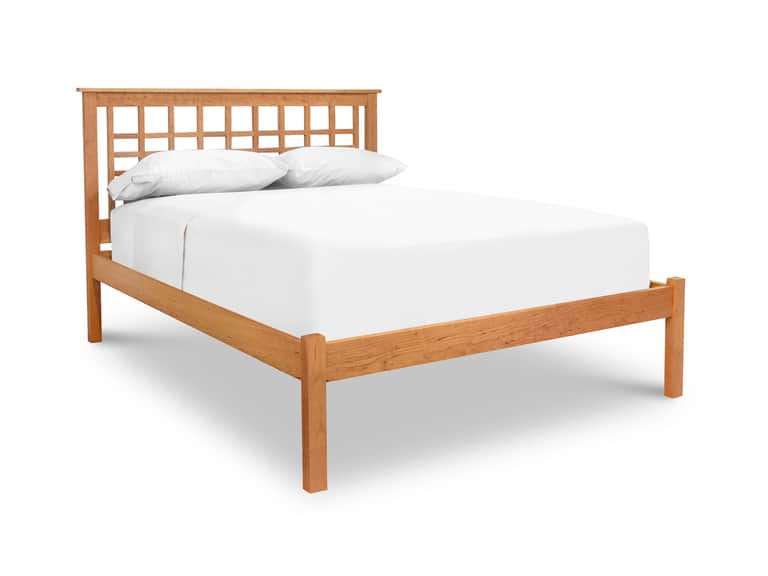
Platform beds are often chosen for this straightforward look. In general, a platform frame is designed to support a mattress on a stable surface or closely spaced slats, without requiring a traditional box spring. Designs vary, however, and the word “platform” does not guarantee a particular height, storage arrangement, material, or support system. Checking the actual specifications is essential.
Think of the frame as part of a room’s working layout, not as a decorative object in isolation. It influences how easily you can make the bed, reach a closet, open drawers, vacuum, and move around at night. A calm bedroom is not necessarily empty or strictly minimalist. It is a space where furniture serves a purpose and the paths between it remain usable.
Start with the room, not the catalog
Before comparing finishes or headboards, take accurate measurements. Record the room’s length and width, then note fixed features such as doors, windows, closets, radiators, outlets, and heating or cooling equipment. Include the direction in which doors swing and the clearance needed to open dresser drawers. These details can matter more than a frame’s appearance in a product listing.
Next, measure the mattress or confirm its stated size. A queen mattress, for example, needs a frame intended for a queen; do not assume that a similar-looking size will fit. If you are replacing an existing frame, measure the mattress itself rather than relying on the old furniture’s outer dimensions. A bed frame can extend beyond the mattress through its headboard, footboard, rails, or legs.
Sketch a simple floor plan, marking the bed’s approximate footprint. Leave comfortable routes from the door to the bed and from the bed to the closet. Where possible, consider the space needed to walk on each side, sit on the edge, and change sheets. A layout that looks balanced in a photograph may be awkward in a narrow room, so test the measurements against your everyday routines.
- Measure the mattress: Confirm both its size and thickness.
- Check the frame’s outer dimensions: Headboards and side rails can add significant width or length.
- Map circulation: Keep doorways, closet access, and frequently used drawers clear.
- Account for bedside furniture: Include nightstands, lamps, and any space needed to reach them.
- Check the delivery route: Hallways, staircases, and tight turns can affect what can be brought into the room.
When in doubt, mark the proposed frame footprint on the floor with removable tape. This simple test makes scale tangible. Stand in the room, walk around the outline, and check whether the bed leaves enough room for the things you actually do there.
Understand the support system
A platform bed frame should provide support appropriate to the mattress it will carry. The frame’s product details should explain how the mattress is supported: by a solid deck, slats, or another specified construction. Look for guidance on mattress compatibility, maximum supported weight, center support, and any restrictions from the mattress maker.
Slat spacing is worth checking. If a mattress manufacturer specifies a maximum distance between slats, make sure the frame meets that requirement. Different mattress types and constructions can have different support needs, so it is better to follow the mattress maker’s instructions than to rely on a general rule. Also check whether the frame needs additional support in the middle, particularly for larger sizes.
Pay attention to assembly and long-term stability. A frame that is easy to put together can be appealing, but the finished structure still needs to feel secure. Read the assembly instructions before buying if they are available, and consider how the parts are joined, whether the frame can be tightened over time, and whether replacement hardware or support components are available.
Noise can affect the sense of restfulness as well. A well-fitted mattress and a properly assembled frame are more likely to feel steady than a loose or mismatched setup. If a frame begins to squeak or shift, check its connections and the manufacturer’s care guidance rather than adding improvised fixes that could compromise support.
Choose height with care
Platform beds range from low-profile designs close to the floor to taller frames with more clearance underneath. Height changes the way a bedroom feels and functions. A low bed can emphasize horizontal lines and keep the view across the room relatively open. A taller frame may make it easier to get in and out of bed or create useful clearance for storage, depending on its construction.
Consider the combined height of the frame and mattress. A thick mattress on a tall frame can place the sleeping surface higher than expected, while a low frame paired with a slim mattress may feel too close to the floor for some people. If possible, estimate the finished height before committing. A chair or sturdy box at the approximate level can help you test how it feels to sit and stand, though it is not a substitute for checking the actual dimensions.
Low clearance can also change cleaning routines. If a vacuum or cleaning tool cannot fit beneath the frame, dust may collect in a place that is harder to reach. Some platform frames sit close to the floor with little or no usable under-bed space; others use legs or a raised structure. Confirm the clearance measurements instead of assuming the bed will accommodate storage containers or cleaning equipment.
Decide whether under-bed storage is useful
Under-bed storage can be a practical answer when closets are limited, but it is not automatically the best route to a clutter-free room. Containers can hold seasonal bedding, extra linens, or occasional-use items. They can also become an out-of-sight pile that is difficult to sort and clean around. Before choosing a frame for storage, identify what you plan to store and how often you will need it.
There are several broad approaches. An open frame with legs offers easy access underneath, though stored items may remain visible. A frame with built-in drawers can conceal belongings, but those drawers need room to open. A lift-up platform may offer a larger enclosed compartment, but it can require more effort to access and may be less convenient for items used frequently. A solid, low base may provide no meaningful storage at all.
Match the design to the room’s circulation. Drawers on both sides can be inconvenient if one side of the bed sits close to a wall. A container that slides out may be difficult to use if a nightstand blocks its path. If under-bed storage is part of the plan, measure not only the available height but also the approach space needed to pull items out.
Keep stored items contained and review them periodically. Use a small number of appropriately sized bins rather than filling every gap with loose belongings. Labeling containers can make seasonal items easier to locate. Leave enough space for airflow where the frame and mattress instructions recommend it, and follow the manufacturers’ cleaning and care guidance.
Compare materials and finishes
Material affects more than appearance. It can influence a frame’s weight, maintenance, durability, repairability, and how it relates to the rest of the furniture. Wood often brings warmth and visible grain. Metal can create a lighter, more spare impression. Upholstered frames introduce softness and texture, though their fabric may call for different cleaning care. Each material has a range of qualities, so compare the construction and finish rather than relying on the category name alone.
For wood frames, look at the stated wood type, construction, finish, and care requirements. A finish that shows natural grain may suit a warm, understated room; a painted finish can provide a more uniform look. Ask how the surface should be cleaned and whether routine care involves special products. If the wood is a focal point, consider how its tone will relate to flooring, dressers, and bedside tables.
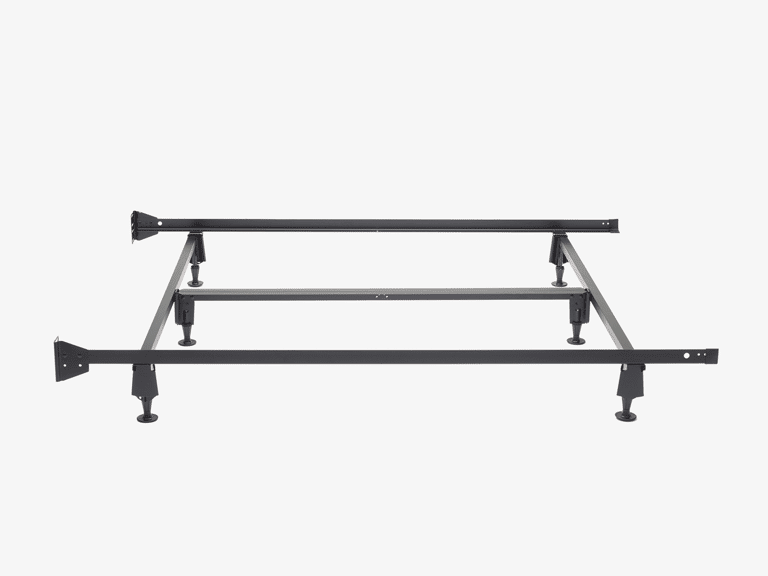
Metal frames can work well when the goal is a simple silhouette, but details matter: the shape of the legs, the visibility of rails, and the finish all influence the overall effect. Upholstered frames may soften a room and provide a padded surface near the head of the bed. Check fabric care instructions and consider how the upholstery will hold up to daily contact, pets, or frequent cleaning.
Durability is also a design choice. A frame that can be maintained or repaired may stay useful longer than one that is difficult to service. Review the warranty, assembly guidance, and availability of replacement parts. These practical details are part of the furniture’s life in a home, even if they are less visible than its color or profile.
Find a style that supports a calmer layout
A minimalist bedroom is not defined by one particular frame or by having almost nothing in it. The aim is usually to make the room easier to use and easier to read. A platform bed’s relatively straightforward form can help, but a clean look depends on proportion, placement, and the number of competing visual elements around it.
In a compact bedroom, a frame with an open profile and restrained headboard may feel less imposing than a large, ornate design. In a larger room, a substantial headboard can help anchor the bed and keep the space from feeling unfinished. Neither approach is universally right. The useful question is whether the bed’s scale feels appropriate alongside the room and the furniture that must remain.
Choose a finish with the whole room in mind. Repeating one or two tones across the bed frame, bedside furniture, and textiles can help create continuity. A contrasting frame can also work, but it may become the room’s main visual feature. Consider whether that is the emphasis you want, especially if the goal is a quieter, less crowded atmosphere.
Resist the impulse to solve every empty corner with another piece of bedroom furniture. A clear floor area is functional: it makes cleaning easier, reduces visual interruption, and provides room to move. The best platform bed frame is not necessarily the one with the most features. It is the one that fits the room’s needs without making the room work harder.
Make mattress and bedding compatibility part of the decision
A platform bed is only one part of the sleep setup. Confirm that the frame accommodates your mattress type and dimensions, and check the mattress maker’s support requirements. If you plan to keep an existing mattress, make its size and condition part of the comparison. If you are buying both together, assess them as a system rather than choosing the frame in isolation.
Think about how the mattress height works with fitted sheets, blankets, and the bedside furniture. A very deep mattress may need sheets with suitable pocket depth. A frame with a high edge or prominent side rail may affect how easily you can tuck bedding or sit on the side. These small interactions shape everyday convenience.
For a tidy appearance, select bedding that fits correctly and can be laundered according to its care label. Crisp, breathable sheets, such as a percale weave, may appeal to people who prefer a cool, structured feel; other fabrics offer different textures and temperature experiences. The important considerations are comfort, fit, and a care routine you can realistically maintain.
A practical comparison checklist
When you narrow the options, compare the same details across each frame. Product names and styled rooms can draw attention to design, while the specifications reveal whether a bed will fit the actual space and support the intended mattress.
- Dimensions: Does the frame fit the mattress, and what are its full outer measurements?
- Support: Is the support system compatible with your mattress, including any slat-spacing requirements?
- Height: What will the combined frame-and-mattress height be?
- Clearance: Is there enough space underneath for cleaning or planned storage?
- Access: Can drawers, doors, and closet paths remain unobstructed?
- Materials: What are the frame and finish made of, and how should they be cared for?
- Assembly: What tools, time, and number of people are recommended?
- Stability: What is the stated weight capacity, and does the frame include required center support?
- Service: What warranty applies, and can parts be replaced if needed?
- Delivery: Can the components fit through the route into the bedroom?
Common mistakes to avoid
Choosing by appearance alone. A frame may look perfect online and still block a closet or leave too little walking space. Measure first, then compare styles that fit the room.
Assuming every platform bed works with every mattress. Support requirements vary. Read both sets of specifications before purchasing, especially if the mattress is already in use.
Overestimating storage. A low frame may have no usable clearance, while drawers need room to open. Verify measurements and test the layout on the floor.
Ignoring the finished bed height. Frame and mattress height combine. Consider getting in and out of bed, changing linens, and how the bed relates to nearby tables.
Filling every available space. Under-bed storage can help, but unused open floor is not wasted space. It can make the bedroom easier to clean and more comfortable to move through.
The quieter choice is the one that fits
Choosing a platform bed frame is a chance to make the bedroom more functional one decision at a time. Begin with measurements and mattress support. Then weigh height, storage, materials, and maintenance against the way you actually use the room. A frame that supports the mattress properly and leaves circulation clear is a stronger foundation for a calm space than one chosen only for a passing trend.
Once the bed is in place, give the room a little time to settle. Keep the most-used items within reach, remove furniture that interrupts movement, and create a simple routine for bedding and floor care. The result need not be a bare, showroom-like bedroom. It can be a comfortable room with enough order to make rest feel easier—and enough practical detail to stay that way.
Frequently asked questions
Does a platform bed need a box spring?
Many platform frames are designed to support a mattress directly, but designs differ. Check the frame instructions and the mattress manufacturer’s requirements before deciding whether an additional foundation is needed.
Are platform beds suitable for small bedrooms?
They can be. A streamlined profile may help a room feel less visually crowded, but the frame still needs to fit the available floor area. Measure its full dimensions and protect clear paths to doors, closets, and other furniture.
How much space should be under a platform bed?
There is no single ideal clearance. It depends on whether you want to store containers, clean beneath the frame, or keep the bed close to the floor. Check the actual clearance and make sure any planned storage can be accessed easily.
What makes a bedroom feel clutter-free?
Useful storage helps, but so do appropriate furniture scale and clear walking routes. Keep frequently used items accessible, give occasional-use belongings a defined home, and avoid adding furniture simply to fill an empty area.